
Professional dental office cleaning typically ranges from $0.08 to $0.30 per square foot, or $25 to $80 per hour for medical-grade services. When determining how much does deep cleaning cost dentist practitioners, the price is primarily influenced by practice size, frequency of service, and specialized clinical sanitization protocols.
Dental practice managers often face the significant challenge of balancing stringent medical grade sanitation requirements with a finite operational budget. While the phrase deep cleaning frequently refers to patient gum treatments, maintaining the physical office to clinical standards presents its own unique financial complexity. A spotless environment is non-negotiable for patient trust and regulatory compliance; however, overpaying for vague service descriptions can unnecessarily strain your practice's bottom line. Understanding the nuances of square footage rates and medical grade specifications ensures your facility remains sterile without wasting precious capital. This guide breaks down current industry pricing models, examines the critical variables that influence quote totals, and provides a clear framework for budgeting your 2,000 to 3,000 square foot facility. You will also learn how to differentiate between basic maintenance and true clinical sterilization to make the most informed choice for your team.
The Two Meanings of Deep Cleaning in a Dental Office
Navigating the terminology of dental care often leads to confusion, especially when searching for pricing online. When someone asks, "how much does deep cleaning cost dentist," the results typically point toward clinical periodontal treatments like scaling and root planing. For a practice manager or owner in McDonough, however, the phrase carries a different weight. This guide is specifically designed to address the environmental and facility costs of maintaining a sterile practice.
In the medical field, clinical safety starts with the physical space. A patient's first impression of your expertise is formed the moment they sit in your waiting area or see the baseboards in an operatory. While the clinical team focuses on patient health, professional deep cleaning services ensure that every surface meets the rigorous standards required for infection control. In Georgia, where local competition is high, maintaining a pristine facility is not just about compliance; it is about building the patient trust necessary to sustain a thriving practice. This article breaks down the financial realities of commercial cleaning maintenance to help you budget for the highest level of care.
Average Dental Office Cleaning Cost per Square Foot and Hour
In the Georgia market, and specifically within the Henry County area, dental office cleaning requires a higher investment than a standard retail storefront or administrative office. For a professional maintenance program, practice managers should expect to pay between $0.15 and $0.35 per square foot. When services are billed on an hourly basis, the rates typically range from $30 to $80 per hour.
While these figures are higher than the $0.10 to $0.18 per square foot often seen in general commercial janitorial contracts, the 25 to 50 percent premium is necessary for clinical safety. Standard office cleaners focus on an "appearance clean," whereas dental environments require "clinically clean" results. This pricing reflects the higher cost of EPA-registered tuberculocidal disinfectants and the specialized labor involved in preventing cross-contamination between operatories and high-traffic waiting areas.
Service Type | Estimated Cost (Per Sq. Ft.) | Estimated Cost (Hourly) |
|---|---|---|
Standard Commercial Office | $0.10 – $0.18 | $25 – $45 |
Dental/Medical Facility | $0.15 – $0.35 | $30 – $80 |
When budgeting for the year, it is helpful to look at the total monthly expenditure. A small to mid-sized practice in McDonough might see monthly invoices ranging from $300 to $800, depending on the frequency of visits. If you are specifically researching how much does deep cleaning cost dentist facilities for a one-time restoration or semi-annual refresh, those rates are often quoted separately because they involve intensive restorative floor care and high-level sanitation.
The added cost also accounts for essential documentation overhead. Professional crews must be trained in OSHA bloodborne pathogen standards, ensuring that every technician understands how to handle sensitive medical environments safely. To see how these rates apply to your specific floor plan, you can get a customized quote that reflects your practice’s unique footprint and patient volume.
Factors That Drive the Cost of Medical Grade Cleaning
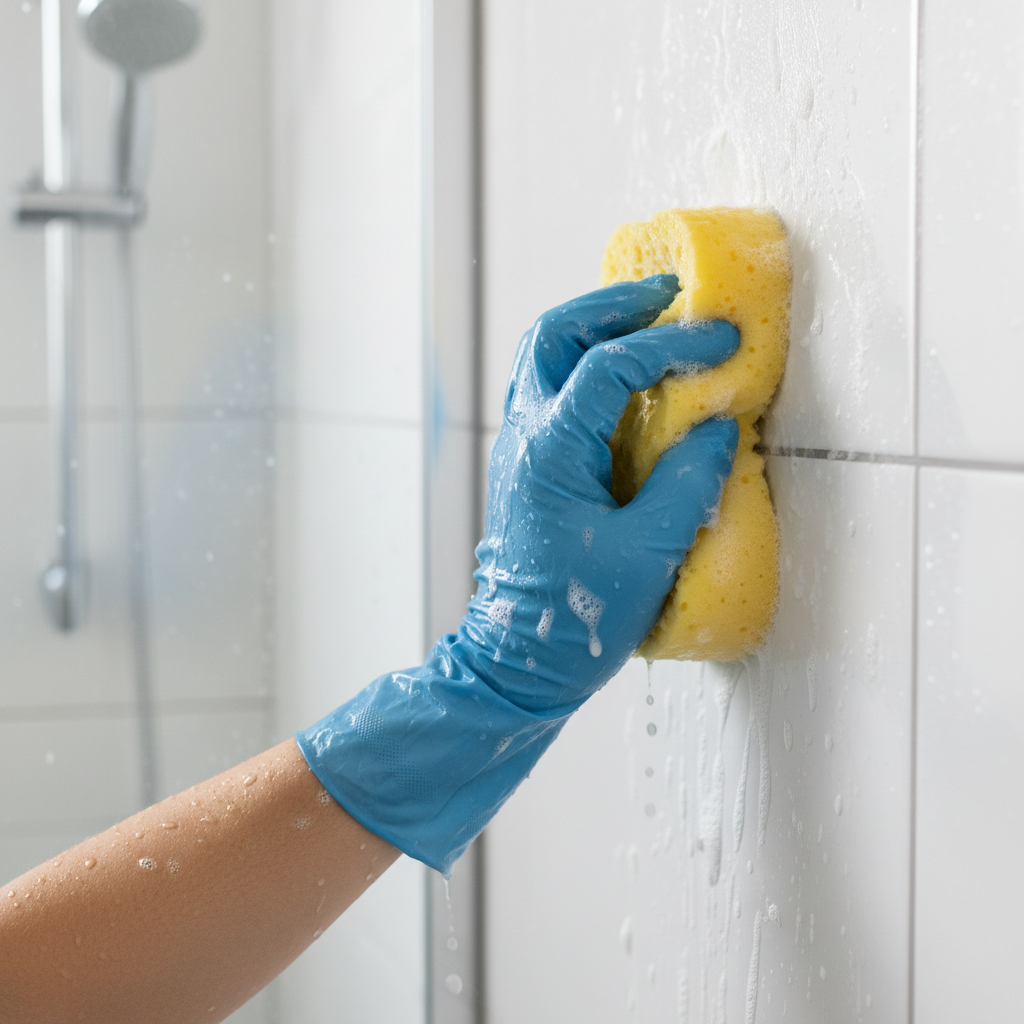
Understanding the specific cost drivers helps clarify why a general janitorial service cannot provide the level of care a dental practice requires. The first major factor is the chemistry used. In a standard retail space in McDonough, all-purpose cleaners are usually sufficient. However, dental environments require EPA-registered tuberculocidal disinfectants capable of killing resistant pathogens. These medical-grade supplies carry a much higher price point than standard janitorial chemicals; furthermore, they must be applied with precise dwell times to be clinically effective.
Beyond the chemicals, the expertise of the staff is a significant investment. When calculating how much does deep cleaning cost dentist facilities, you are paying for specialized labor. Professional teams must undergo rigorous bloodborne pathogen training to comply with OSHA standards. This ensures that the technicians understand how to safely navigate operatories, handle potential biohazards, and use personal protective equipment correctly. This specialized commercial cleaning maintenance reduces the risk of workplace accidents and protects the clinical integrity of your practice.
To further eliminate risk, high-end services implement color-coded microfiber systems. This protocol prevents cross-contamination by ensuring that a cloth used to wipe down a high-touch surface in an operatory never touches a chair in the waiting room. Each zone in the office has designated tools, a process that requires a larger inventory of specialized supplies and more rigorous management on the part of the cleaning provider.
Finally, there is the documentation overhead. For a dental office to remain audit-ready for OSHA, every cleaning session must be backed by accessible Safety Data Sheets (SDS) and clear service logs. This administrative layer provides practice managers with peace of mind, knowing that if a compliance officer walks through the door, the sanitation records are impeccable. While these factors increase the initial quote, they provide a level of professional deep cleaning services that ensures the safety of both your staff and your patients in Henry County.
Deep Cleaning vs. Maintenance: What Does Your Practice Need?
Distinguishing between daily sanitation and a periodic facility refresh is essential for managing your overhead effectively. Nightly commercial cleaning maintenance focuses on the immediate clinical environment; this includes sanitizing high-touch points, emptying waste, and keeping waiting rooms presentable for the next day's patients. These tasks ensure that the office remains hygienic on a shift-to-shift basis.
Conversely, a facility deep clean addresses the areas that standard janitorial sweeps often miss. This intensive process includes high-level dusting of ceiling vents and light fixtures, detailed scrubbing of baseboards, and deep cleaning window tracks where dust and debris accumulate. It also involves specialized floor care, such as machine scrubbing tile grout or refinishing hard surfaces to remove persistent scuffs and staining.
When evaluating how much does deep cleaning cost dentist facilities for these specialized projects, remember that these are restorative services rather than routine upkeep. For most practices in Henry County, scheduling professional deep cleaning services at least twice a year is the gold standard. This frequency prevents the buildup of allergens and pathogens in hard-to-reach areas, ensuring your practice maintains the pristine, medical-grade reputation that McDonough patients expect. These semi-annual refreshes serve as a vital reset, protecting your facility’s long-term value and clinical safety.
Budgeting for a 2,000 to 3,000 Square Foot Dental Practice
For a mid-sized dental practice in McDonough occupying approximately 2,500 square feet, budgeting requires a two-tiered approach. The first tier covers routine commercial cleaning maintenance performed three to five nights per week. This includes clinical sanitation, biohazard trash removal, and restroom upkeep. For this footprint, monthly maintenance costs typically fall between $500 and $850, depending on patient volume and the number of operatories.
Service Tier | Description | Estimated Investment |
|---|---|---|
Monthly Maintenance | Trash, vacuuming, sanitizing touch-points | $500 – $850 |
Semi-Annual Deep Clean | High dusting, baseboards, grout scrubbing | $400 – $750 per visit |
Annual Floor Restoration | Stripping, waxing, or stone polishing | $600 – $1,200 |
Practice managers often research how much should I charge to clean a 2000 sq ft office to understand the market rate for their own facilities. When calculating how much does deep cleaning cost dentist operations at this scale, remember that the high ratio of plumbing fixtures and specialized surfaces in dental suites drives the price above standard office rates. To ensure your specific layout is accounted for, you can get a customized quote that details these line items. Factoring in both the daily hygiene and the semi-annual restorative tasks ensures no surprise expenses arise during the fiscal year.
The Hidden Costs of Choosing the Wrong Cleaning Service
Selecting a cleaning provider based solely on the lowest bid often leads to expenses that far outweigh the initial savings. Generic commercial cleaners frequently lack the specialized knowledge required to navigate a clinical environment safely. For instance, using inappropriate corrosive chemicals on expensive dental chairs can lead to cracked upholstery or damaged electronic components; replacing a single operatory chair can cost thousands of dollars, dwarfing any monthly janitorial savings.
Furthermore, professional commercial cleaning maintenance must align with OSHA standards. Hiring a service that lacks bloodborne pathogen training or fails to maintain an up-to-date Safety Data Sheet (SDS) binder leaves your practice vulnerable to significant regulatory fines during a surprise inspection. Beyond the physical risks, there is the intangible cost of reputation. Patients in McDonough have high expectations for hygiene; a film of dust on a waiting room baseboard or a lingering odor in the restroom can quickly erode trust in your clinical expertise.
When evaluating how much does deep cleaning cost dentist facilities, it is crucial to account for the protection of your high-value assets and patient relationships. Lynett Treasures focuses on the small, critical details that larger franchises often overlook, ensuring your facility remains audit-ready and patient-approved. Investing in professional deep cleaning services from a team that understands dental-specific protocols is the most effective way to safeguard your professional standing. To ensure your facility receives this level of care, you can get a customized quote tailored to your practice’s specific requirements.
A Practice Manager Checklist for Evaluating Cleaning Quotes
Evaluating a proposal requires looking beyond the bottom line. To ensure your facility receives commercial cleaning maintenance that meets clinical standards, you must vet the provider’s operational protocols. When comparing quotes to determine how much does deep cleaning cost dentist facilities in the Henry County area, use the following checklist to interview local McDonough cleaning companies.
Insurance and Bonding: Can you provide current certificates for general liability and workers’ compensation insurance?
Safety Training: Do your technicians receive formal OSHA Bloodborne Pathogen training, and is it refreshed annually?
Chemical Selection: Which specific EPA-registered, tuberculocidal disinfectants do you use, and do they meet CDC guidelines for dental settings?
Cross-Contamination Prevention: Do you utilize a color-coded microfiber system to ensure tools used in operatories are never used in waiting areas or restrooms?
Documentation: Do you provide a detailed checklist of completed tasks after every visit and maintain an on-site Safety Data Sheet (SDS) binder?
Accountability: What is your process for periodic quality inspections and manager-level communication?
High-quality professional deep cleaning services should provide clear, affirmative answers to each of these points. If you would like a transparent breakdown of how these clinical standards apply to your specific facility, you can get a customized quote from our team.